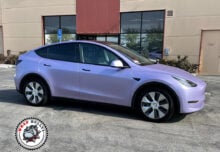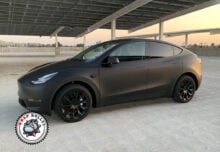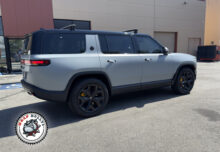
Tesla Vehicle Wrap Service | Vinyl Wrap vs Colored PPF | Wrap Bullys
Tesla now offers vehicle wraps through its service centers, bringing more attention to vehicle customization options. While Tesla’s wrap service appears similar to traditional color change wraps, understanding the material and purpose helps clarify how these wraps compare to other options such as vinyl wraps and colored paint protection film.
Tesla states its wraps are made from polyvinyl chloride, also known as PVC vinyl. This is the same base material commonly used for color change wraps throughout the industry. PVC vinyl allows vehicle owners to change the appearance of their vehicle while preserving the original paint underneath.
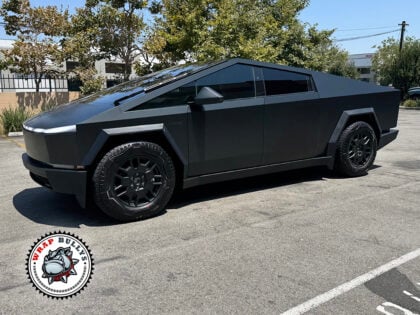
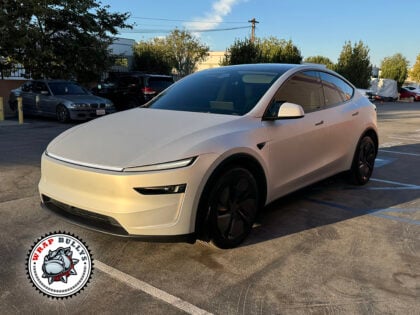
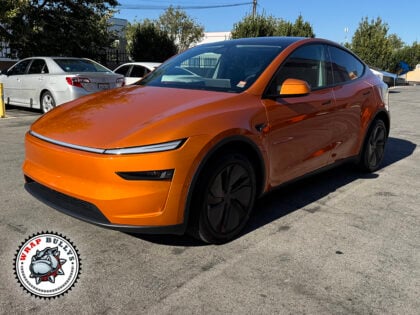
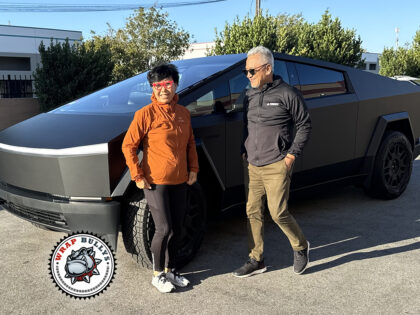
Understanding Tesla Vinyl Wrap Material
PVC vinyl is designed primarily for appearance customization. It is flexible, conformable, and removable when professionally installed.
PVC vinyl provides:
• Ability to change vehicle color and finish
• Flexibility to conform to body panels
• Removable installation
• Light surface protection as a secondary benefit
Most full vehicle wraps use cast vinyl, which provides better performance and finish consistency.
Cast Vinyl vs Calendared Vinyl Wrap
There are two primary types of PVC vinyl used in vehicle wraps.
Cast Vinyl Wrap
Cast vinyl is considered the premium wrap material.
Cast vinyl provides:
• Better conformability
• Improved durability
• More stable finish over time
• Ideal performance on complex vehicle surfaces
This is the preferred material for full color change wraps.
Calendared Vinyl Wrap
Calendared vinyl is produced differently and performs best in limited applications.
Calendared vinyl provides:
• Thicker material construction
• Less flexibility
• Higher shrinkage over time
• Better suited for flat surfaces and graphics
Calendared vinyl is generally not recommended for full vehicle wraps.
How Colored Paint Protection Film Differs
Colored paint protection film is made from thermoplastic polyurethane, also known as TPU. This material is engineered for protection while also allowing color change.
Colored PPF provides:
• Protection against rock chips and road debris
• Thicker and more durable film
• Self-healing surface technology
• Long-term paint protection
Colored PPF combines both appearance customization and protection.
Tesla Wrap vs Colored PPF vs Independent Wrap Installation
Tesla’s wrap service uses PVC vinyl and provides a manufacturer-managed installation option. Independent wrap shops offer additional flexibility in materials and finishes.
Independent wrap shops provide:
• Vinyl color change wraps
• Colored paint protection film
• Greater color and finish selection
• Custom installation options
• Protection-focused film options
This allows vehicle owners to choose based on their priorities.
Why Material Choice Matters
Vinyl wrap and colored paint protection film serve different purposes.
Vinyl wrap is designed for appearance change.
Colored paint protection film is designed for both appearance and protection.
Understanding the material helps determine which option is best for your vehicle.
Tesla Wrap and Colored PPF Installation | Wrap Bullys
Wrap Bullys provides professional Tesla wrap installation and colored paint protection film services. Our installation process ensures proper preparation, precise installation, and a clean finish.
To request a quote, call:
(213) 293-9727
or submit a request:
https://wrapbullys.com/contact-us/
Frequently Asked Questions
What material does Tesla use for vehicle wraps?
Tesla uses PVC vinyl, which is the same material used for traditional color change wraps.
Is colored paint protection film different from vinyl wrap?
Yes. Colored paint protection film is made from TPU and provides impact protection, while vinyl wrap is designed primarily for appearance.
What is the difference between cast and calendared vinyl?
Cast vinyl is thinner, more conformable, and ideal for full vehicle wraps. Calendared vinyl is thicker and better suited for flat or temporary applications.